
🇭🇷 Croatia
Osijek quiz
In Quizdom, Osijek is a map with 77 landmarks and 3,344 questions about the city’s history, culture and everyday life. Walk to a location, take the quiz and claim it.
- landmarks
- 77
- questions
- 3,344
- Map
- Illustrated city map
Questions about Osijek
The game has 3,344 questions about the city across 13 topics. Here is how they split by topic and difficulty.
By topic
- Nature717
- Local life576
- History504
- Culture423
- Architecture249
- Food and drink213
- Geography196
- Sport160
+ 5 more topics
By difficulty
- Easy306
- Medium878
- Hard1,330
- Expert830
A quiz at a location picks five questions. Every answer comes with a short explanation.
Landmarks in Osijek
Every landmark is a location in the game. Open one for its description and its quiz.
 Arheološki muzej OsijekAn archaeological museum in Osijek, Croatia.
 August Cesarec - ŠetačA monument to the writer August Cesarec (1893-1941) showing him in mid-stride, which is why the city knows it simply as the Walker.
 Auto pijaca (sajam)The site of the second-hand vehicle fair traditionally held at weekends, heir to Osijek's old fairgrounds and today specialised by type of goods.
 Ćiro Truhelka 1865-1942A memorial to Ćiro Truhelka (1865-1942), an Osijek native who ran the National Museum in Sarajevo for decades and studied stećak tombstones and the Bosnian Middle Ages.
 Crkva svetog Mihaela arkanđelaA church in Osijek, Croatia.
 Crkva sv. JakovaA monastery with a church in Croatia.
 Crkva sv. KrižaA monastery with a church in Croatia.
 Crkva uspenja presvete BogorodiceA church in Osijek, Croatia.
 Crveni fićoA marker of a scene from 1991, when an armoured vehicle crushed an abandoned car; the photograph of that moment became one of the best-known images of the start of the Homeland War.
 Dječje kazalište Branka MihaljevićaA theatre in Croatia.
 Donjogradska tržnicaThe market of Donji grad, a separate settlement with its own square and church until 1786, and still a place for the daily sale of local produce.
 Dvorac Mačkamama (Vila Hermann)The former Hermann family villa in southern Osijek, better known as Mačkamama; the statue of the same name stands nearby and is a separate monument.
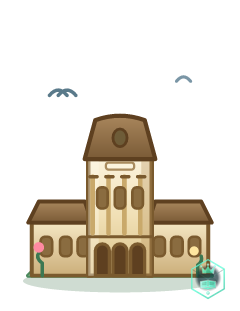 Dvorac PejačevićA manor house in Osijek, Croatia.
 Esseker centarA retail and business space in the city centre; its name invokes the Essekers, the old citizens of Osijek and their speech mixed from Croatian, German and Hungarian words.
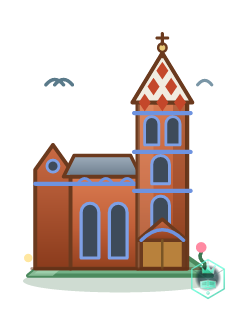 Evangelička crkvaA church that speaks of the religious variety of Osijek, where Germans, Hungarians and Slovaks settled in the 18th and 19th centuries alongside local Catholics, Orthodox Christians and Jews.
 Fakultet elektrotehnike, računarstva i informacijskih tehnologija OsijekA faculty in Osijek, Croatia.
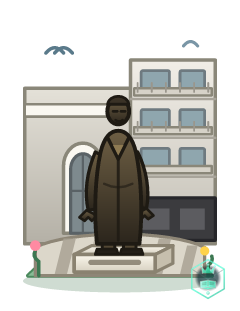 Franjo TuđmanA monument to the first President of Croatia, in a city heavily shelled during the Homeland War and on the front line of the defence of eastern Slavonia.
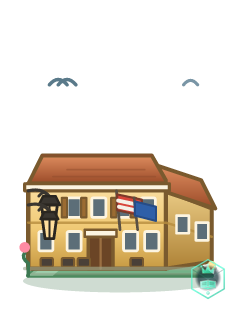 Grad OsijekThe seat of the city government of Slavonia's largest city, which became a free royal city in 1809 and is today the centre of Osijek-Baranja County.
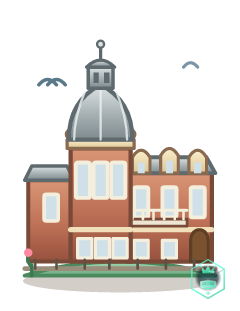 Gradska i sveučilišna knjižnica OsijekA public library.
 Gradski bazeniThe pools within the Gradski vrt sports centre, used for swimming, water polo and recreation all year round.
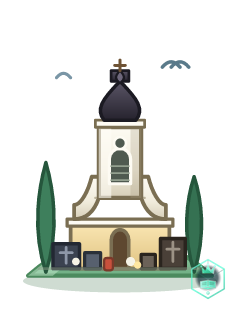 Groblje Svete AneSt Anne's cemetery is Osijek's city cemetery, in the Gornji grad district.
 Hotel OsijekA hotel in Osijek, Croatia.
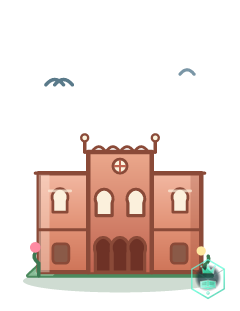 Hrvatsko narodno kazalište u OsijekuA theatre in Osijek, Croatia.
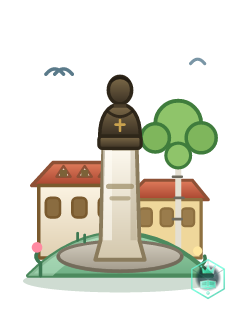 Josip Juraj StrossmayerA monument to Josip Juraj Strossmayer, born in Osijek in 1815; the bishop of Đakovo and patron of the arts founded the Yugoslav Academy of Sciences and Arts.
 Kapela sv. RokaA chapel in Osijek, Croatia.
 Kino UraniaA cinema in Osijek, Croatia.
 KompaA traditional Drava ferry driven by the river's current; for centuries it has carried the people of Osijek to the Baranja bank and it remains a favourite city symbol.
 Koncertna dvorana Franjo Krežma Franjo Krežma 1862-1881A concert hall named after Franjo Krežma (1862-1881), the Osijek violinist who performed in European halls as a child and died before his nineteenth birthday.
 konkatedrala svetog Petra i PavlaA co-cathedral in Osijek.
 KopikaA bathing area and promenade along the Drava, the river that for centuries was Osijek's transport route, source of food and border with Baranja.
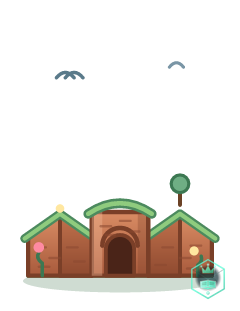 Krunska utvrdaThe outer part of Tvrđa's defensive system, raised as additional protection; crownworks are built in front of the main rampart, with two demi-bastions and a bastion in the middle.
 Kulturni centar OsijekA venue for concerts, exhibitions and contemporary culture, important to young people and to the independent scene working outside the big institutions.
 Kužni pilA Baroque votive column of the Holy Trinity on the main square of Osijek's Tvrđa (1729-1730), raised as a vow against the plague and paid for by General Petraš's widow.
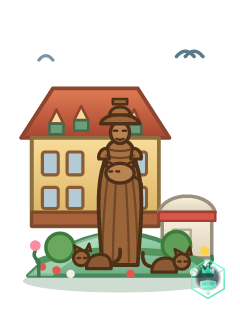 MačkamamaAn Osijek district on the road to Baranja whose name, by tradition, comes from an innkeeper who fed cats; today it stands for the whole area along the Drava.
 Medicinski fakultetA department of the Josip Juraj Strossmayer University of Osijek.
 Miroslav Krleža 1893-1981A monument to Miroslav Krleža (1893-1981), author of The Ballads of Petrica Kerempuh and The Glembays and founder of the Lexicographical Institute.
 Momentum boulderA hall for sport climbing on low artificial walls, without ropes and over thick mats; bouldering has been part of the Olympic programme since 2020.
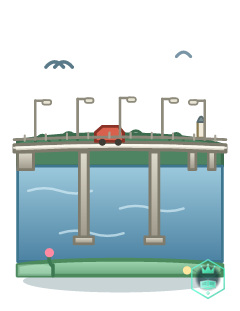 Most dr. Franje TuđmanaA bridge in Osijek, Croatia.
 Muzej likovnih umjetnostiA gallery in Osijek, Croatia.
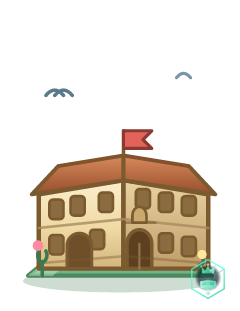 Muzej SlavonijeOne of the oldest museums in Croatia and, by the size of its holdings, among the most important; founded in 1877 as the museum of the free and royal city of Osijek with a donated collection of coins, arms and medals.
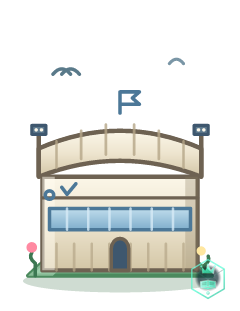 Opus ArenaA football stadium in Osijek.
 Osijek BastionA space beside the 18th-century ramparts of Tvrđa; bastions are projecting five-sided works from which the wall was defended by flanking fire.
 Osječka tržnicaThe city market in the centre of Osijek, where fruit, vegetables and home-made goods from Slavonian villages are sold every day.
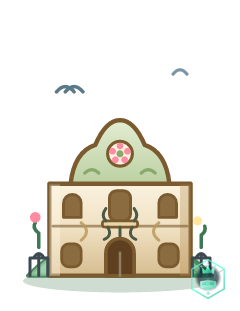 Palača NormannA government building in Osijek, Croatia.
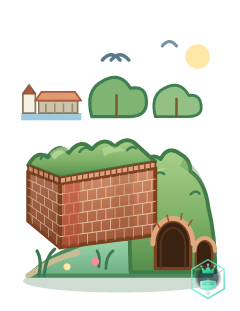 Park KatakombeA park named after the underground spaces of the former fortifications; true catacombs are the underground cemeteries and corridors of the early Christians, the best known in Rome.
 Park kneza BranimiraA park named after Duke Branimir, who in 879 received recognition of his rule over the Croats from Pope John VIII - the first international recognition of the Croatian state.
 Park kralja DržislavaA park named after Stjepan Držislav, the Croatian king of the late 10th century who received his royal insignia from the Byzantine emperor.
 Park kralja Petra Krešimira IV.A park named after the 11th-century king in whose reign the Croatian state reached its greatest extent and the Adriatic was called our sea.
 Park Svetišta Srca IsusovaA landscaped green beside the shrine of the Sacred Heart of Jesus; that devotion stresses God's love for people, and the month of June is dedicated to it.
 Park za pse BobiA fenced area where dogs can run off the lead, since a lead is compulsory on all other public ground.
 Perivoj bana Josipa ŠokčevićaA park named after Ban Josip Šokčević, born in Vinkovci in 1811, in whose time Croatian was introduced into offices and schools.
 Perivoj kralja TomislavaA park in Osijek.
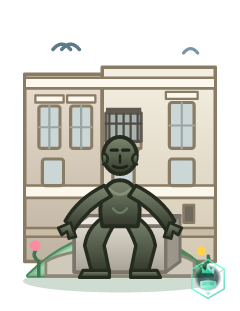 PicassoAn eatery in the city centre named after Pablo Picasso, the painter who founded Cubism with Georges Braque.
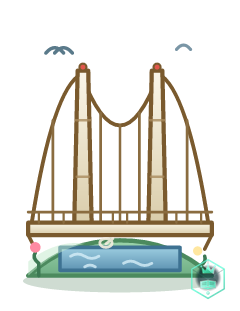 Pješački mostA footbridge in Osijek, Croatia, spanning the Drava and one of the city's most notable symbols.
 Plaža ŽeljaA city river bathing area on the left bank of the Drava, reached by the footbridge; the river is the city's main relief in the hot Pannonian summers.
 SakuntalaA statue in an Osijek park named after the heroine of Kalidasa's ancient Indian drama, a story that inspired Goethe in late 18th-century Europe.
 Secesijski zdenacA well from the time the city gained its waterworks, part of the Art Nouveau treatment of public space that Osijek is known for.
 Sokolski domA hall built for the Sokol society, the gymnastic and patriotic movement that from the later 19th century was a centre of physical training and social life.
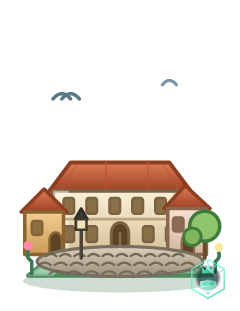 Solarski trgA square in Donji grad named after the salt merchants; for centuries salt was a strategic commodity needed to preserve food and kept under strict official control.
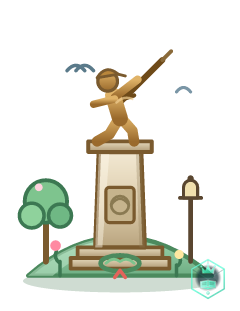 Spomenik palom domobranuA monument to the soldiers of the Croatian Home Guard, the force raised after the 1868 Settlement within Austria-Hungary, which used Croatian as its language of command.
 Sportska dvorana Gradski vrtA sports hall in Osijek.
 Športska dvorana JugA sports hall in Osijek.
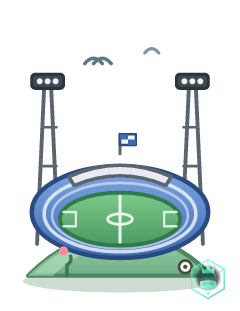 Stadion Gradski vrtA football stadium in Osijek.
 Trga Vatroslava LisinskogA square named after Vatroslav Lisinski (1819-1854), composer of the first Croatian opera, Love and Malice, performed in Zagreb in 1846.
 Trg baruna Franje TrenkaA square named after the Slavonian baron Franjo Trenk (1711-1749), commander of the pandurs, the light troops made famous in the wars of the mid-18th century.
 Trg Jurja KrižanićaA square named after Juraj Križanić, priest and linguist born around 1618, an advocate of Slavic unity who wrote his main works in Siberian exile.
 Trg Lavoslava RužičkeA square named after Lavoslav Ružička, winner of the 1939 Nobel Prize in Chemistry, who went to school in Osijek.
 Trg Nikole TesleA square named after Nikola Tesla, born in Smiljan in 1856, creator of the alternating current system that made long-distance power transmission possible.
 Trg pape Ivana Pavla II.A square named after the pope who led the Church from 1978 to 2005 and visited Croatia three times; he was the first Polish pope after more than four centuries of Italian ones.
 Trg slobodeOne of the main city squares, in Gornji grad, ringed by buildings from around 1900 and a place for the city's gatherings and celebrations.
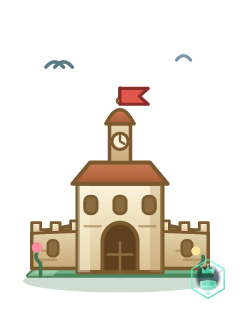 TvrđaThe old town in Osijek, Croatia.
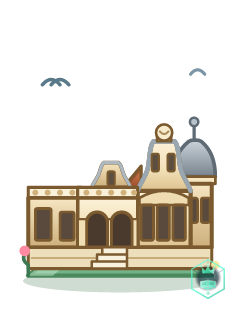 Vila MimiA grand Art Nouveau family house from around 1900, with the richly decorated façade and garden typical of Osijek villas of the period.
 Vrt Jagode TruhelkeA garden dedicated to Jagoda Truhelka (born in Osijek in 1864), author of Zlatni danci and one of the first Croatian women teachers and advocates of girls' education.
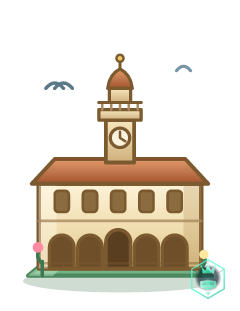 Zgrade Glavne stražeA historical building in Osijek, Croatia.
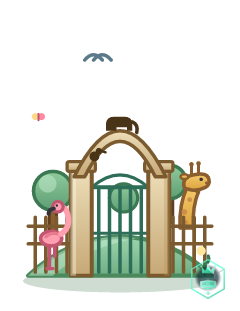 Zoološki vrt i akvarij grada OsijekaCroatia's largest zoo, spread over 11 hectares on the left bank of the Drava and home to more than 100 species; founded in 1955, it gives its giraffes, lions and tigers some of Europe's largest enclosures.
 Županijska palačaA public administration building.
More locations in the game
Gacka Retail Park
Nearby cities
Conquer Osijek with knowledge
The account is free. Take your phone for a walk and start with the nearest landmark.
Create a free account