
🇭🇷 Croatia
Zadar quiz
In Quizdom, Zadar is a map with 76 landmarks and 3,359 questions about the city’s history, culture and everyday life. Walk to a location, take the quiz and claim it.
- landmarks
- 76
- questions
- 3,359
- Map
- Illustrated city map
Questions about Zadar
The game has 3,359 questions about the city across 13 topics. Here is how they split by topic and difficulty.
By topic
- History525
- Local life501
- Nature392
- Culture378
- Geography299
- Architecture279
- Sea and seafaring229
- Food and drink185
+ 5 more topics
By difficulty
- Easy249
- Medium872
- Hard1,287
- Expert951
A quiz at a location picks five questions. Every answer comes with a short explanation.
Landmarks in Zadar
Every landmark is a location in the game. Open one for its description and its quiz.
 Arheološki muzej ZadarFounded in 1832, it is the second oldest museum in Croatia. Its display runs from the Palaeolithic and the metal ages through Roman finds to Croatian heritage of the 7th to 12th centuries.
 BorikA beach and Zadar's largest hotel zone in the north of the city, named after the pines planted along the shore. They give shade in summer and shelter from the bura, and the shallow cove suits families.
 Centar za mlade ZadarA city space for workshops, socialising and cultural programmes for young people. Such centres answer a need for somewhere in the centre where time can be spent without spending money.
 City GalleriaA shopping centre outside the old town, with shops, food and a cinema under one roof. In rain and bura wind it takes over part of the role the seaside promenade plays in summer.
 City Park ZadarA shopping centre on a road outside the old town. Large shops cannot fit the protected, pedestrianised core, so they grew up on the mainland side of the city, along the main approaches.
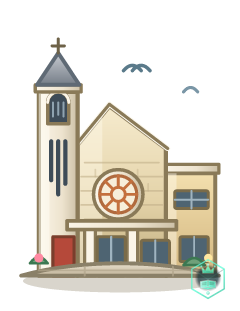 crkva Blaženog Alojzija StepincaThe parish church in Bili Brig, consecrated in 2020 after parishioners had worshipped for twenty-two years in an unconsecrated building. It bears the name of the Zagreb archbishop beatified in 1998.
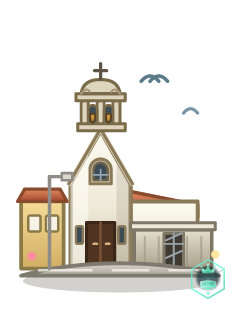 crkva Duha SvetogaA parish church from the series Zadar gained in its new districts in the 20th century. It is dedicated to the Holy Spirit, whose descent on the apostles is marked at Pentecost, fifty days after Easter.
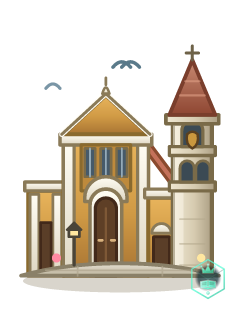 crkva Gospe LoretskeThe parish church of Zadar's Arbanasi, Catholic Albanians who settled here between 1726 and 1733 from villages by Lake Skadar. Their feast of Our Lady of Loreto is known locally as the Arbanasi miracle.
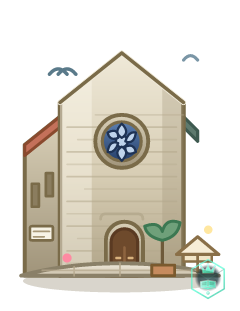 Crkva svetog DominikaA Gothic church beside the Dominican monastery founded in 1228, the second in Croatia after Dubrovnik's. In 1396 the first Croatian university, the Universitas Iadertina, was founded here.
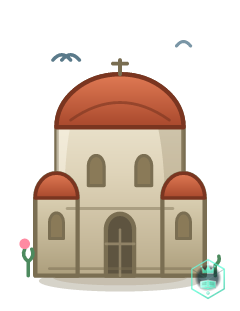 crkva svetog DonataThe largest pre-Romanesque building in Croatia, a round 9th-century church 27 metres high. Raised directly on the Roman forum, it has ancient altars and columns built into its walls.
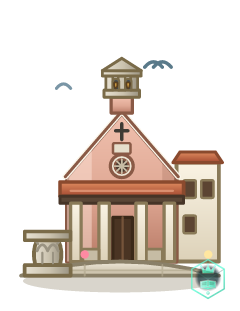 crkva svetog Ivana KrstiteljaThe church of the Glagolitic Third Order Franciscans, whose monastery of 1439 is the order's mother house in Croatia. For centuries they celebrated in Old Church Slavonic and wrote in Glagolitic.
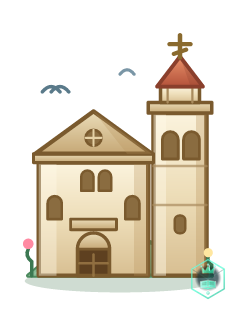 Crkva sv. IlijeA 16th-century Orthodox church raised on the site of the Roman capitol and enlarged in the late Baroque. It keeps a collection of icons from the 16th to the 18th century, among the city's most valuable.
 Dvorana JazineA hall by the bay of the same name, for decades the city's main venue before Višnjik opened in 2008. Today it serves training, school sport and smaller competitions.
 Dvorana Krešimira ĆosićaZadar's largest hall, seating some 8,500, built between 2004 and 2008 in the Višnjik sports centre. It carries the name of the basketball player Krešimir Ćosić, whose statue stands at the entrance.
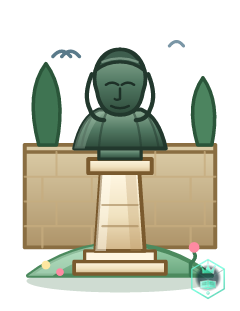 Franjo VranjaninA memorial to the sculptor born around 1430 in Vrana and known abroad as Francesco Laurana. He worked on the triumphal arch of Alfonso I in Naples, and owes his fame to his refined female busts.
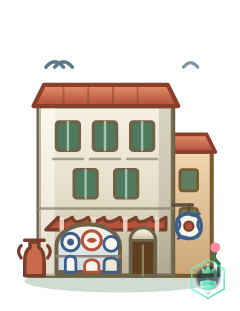 Galerija keramikeAn exhibition space devoted to ceramics, the craft of shaping and firing clay. Present around Zadar since prehistory, potsherds are archaeologists' main tool for dating a site.
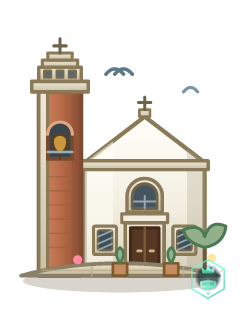 Gospa MaslinskaA Marian church on the Zadar coast whose title links Mary with the olive. Olives have been grown in Dalmatia for more than two millennia, and their oil is used in church rites as well.
 Gradska knjižnica - ArbanasiA branch of the city library in the district settled in the 18th century by the Arbanasi, Catholic Albanians from the Skadar region. Besides lending it offers a reading room, workshops and children's events.
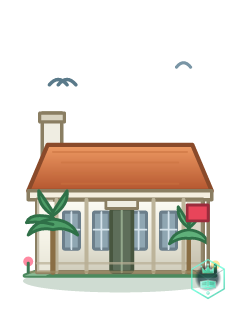 Gradska knjižnica ZadarThe library opened in 1857 as the Biblioteca Comunale Paravia, built on the collection Pietro Alessandro Paravia gave to the city; its first home was the City Loggia on the main square.
 Gradski mostA footbridge over the harbour, opened in 1962 to a design by Vojislav Draganić. It has an opening mechanism, used exactly once - on opening day, since one pier never reached its designed depth.
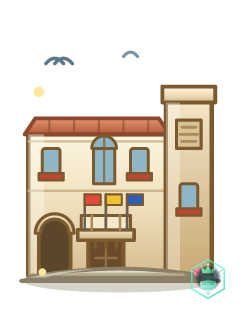 Grad ZadarThe seat of government of a city of around seventy thousand and the centre of Zadar County. Under Austrian rule in the 19th century, Zadar was the administrative capital of all Dalmatia.
 Hrvatsko narodno kazališteA theatre on the site of the Teatro Nobile, the noble house of 1783 that was Croatia's foremost opera stage in the 19th century. The present theatre opened in 1945.
 Hyatt Regency ZadarA five-star hotel in the early 20th-century building of the former Maraska factory, right on the waterfront. Maraschino, the liqueur from the native marasca cherry, is a Zadar hallmark of long standing.
 Jadran BeachA managed bathing area by the hotel zone in the north of the city, in the line of beaches with Borik, Uskok and Puntamika. The sea here stays calm, sheltered by the islands offshore.
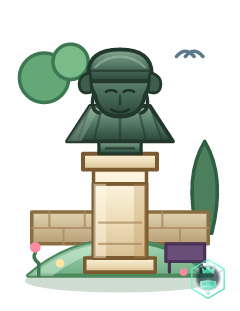 Juraj DalmatinacA memorial to the sculptor and builder born in Zadar early in the 15th century. Called from Venice to continue Šibenik cathedral, he added its transept, dome, baptistery and sacristy.
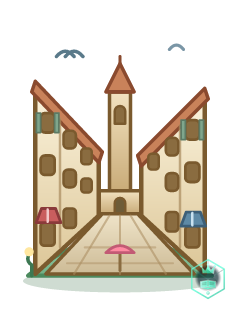 KalelargaZadar's main street, following the line of the Roman decumanus; its name comes from the Venetian Calle Larga, the wide street. Once five metres across, it is thirteen today.
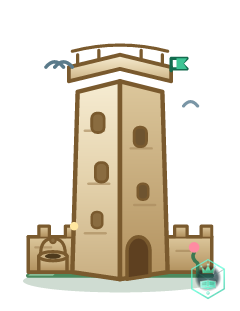 Kapetanova kulaA medieval defensive tower 26 metres high on the western side of the Square of the Five Wells. It once watched the landward approach to the city; today it serves as an exhibition space.
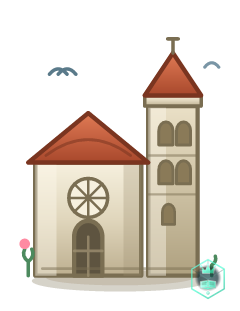 katedrala svete StošijeThe largest church in Dalmatia, a three-nave Romanesque cathedral of the 12th and 13th centuries. Its apse holds the marble sarcophagus of St Anastasia, whose relics Bishop Donatus got from the Byzantine emperor.
 Kazalište lutakaFounded in 1951, it is the second oldest professional puppet theatre in Croatia, after Zagreb's. Its first production was Little Red Riding Hood in Vladimir Nazor's adaptation.
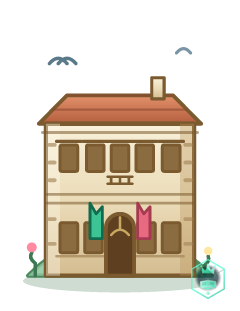 Kneževa palačaThe seat of the city rector, recorded as early as the 13th century; Roman and late antique remains were found in its foundations. Restored in 2017, it now holds a museum, a concert hall and galleries.
 KolovareZadar's best-known city beach, south-east of the peninsula, with pine woods along the shore. It has held the Blue Flag, the international mark of clean water and good management, since 2014.
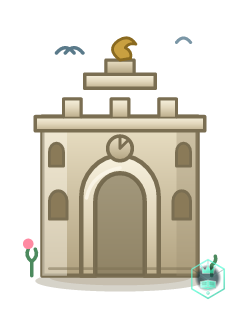 Kopnena vrataThe main entrance to the old town, raised in 1543 to a design by Michele Sanmicheli in the form of a Roman triumphal arch. Above the passage rides St Chrysogonus, and above him the lion of St Mark.
 Krešimir Ćosić spomenikA statue of the basketball player (1948-1995) who grew up in Zadar and won three Olympic medals. At Brigham Young University he became the first foreigner named an All-American.
 Moon Fun ParkAn indoor play space for children and families, the kind that matters most in coastal towns out of season and in bad weather - and the bura around Zadar can blow for days.
 Morska vrataA city gate raised in 1573 to honour the victory at Lepanto, in which seven Zadar ships took part. Its rebuilding reused parts of the Roman arch put up by Melia Aniana.
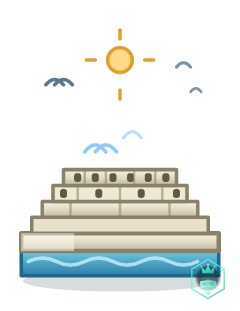 Morske orguljeNikola Bašić's sound installation of 2005 at the tip of the peninsula: pipes hidden beneath the stone steps are blown by the waves pushing air through them. The sea never plays the same tune twice.
 Muzej antičkog staklaA museum opened in 2009 and unique in this part of Europe: it holds more than five thousand pieces of ancient glass. Visitors are also shown the ancient craft of glassblowing.
 Muzej iluzijaA museum of optical illusions in the old town, with a kaleidoscope, a tilted room, a mirror room and a clone table. It is built to entertain and to show how easily the brain fools itself.
 Narodni muzej - Prirodoslovni odsjekThe natural history department of the National Museum, an institution whose museum work reaches back to 1832. Its collections now hold about a hundred thousand items from Zadar and its county.
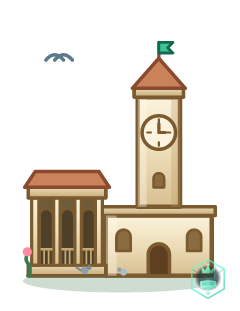 Narodni trgFor centuries the centre of public life and city government. The City Loggia of 1565 closes its western side, facing the City Guard of 1562, whose tower clock has run without a break since 1803.
 Nova vrataOne of the gates of the Venetian defensive system that UNESCO added to the World Heritage list in 2017. A gate was never just a way through the walls, but the city's public face.
 Perivoj Gospe od zdravljaA park between the Square of the Three Wells and the church of the same name, known for its busts of distinguished citizens among Mediterranean plants. Work on it began in 1865, with the New Theatre.
 Perivoj hrvatskih redarstvenikaA park dedicated to the police officers killed defending Croatia. They held the front line before an army existed: special units were formed in 1990, the National Guard only in May 1991.
 Perivoj JarulaA city park among the housing blocks. In a Mediterranean city a park is more than ornament: the shade of pines and cypresses lowers the heat, while greenery holds dust and softens noise.
 Perivoj kraljice Jelene MadijevkeThe first public park in Dalmatia, opened in 1829 on the Grimani bastion. Baron Franz Ludwig von Welden, military governor and botanist, laid it out; 282 plant species grow there today.
 Perivoj Vladimira NazoraA park laid out between 1888 and 1890 on a bastion of the old defences, planted with Mediterranean trees and shrubs. It is protected as a monument of landscape architecture.
 Petar ZoranićA memorial to the writer born in Zadar in 1508, author of Planine, the first Croatian novel. He finished it in 1536, warning three centuries before the Illyrians that the national language lay neglected.
 Poljana Pavla PavlovićaA small square in the south-eastern part of Zadar's old town, near the University and the Land Gate; it is named after Pavao Pavlović, a Zadar patrician and chronicler around 1400.
 Pozdrav SuncuA circle 22 metres across of some three hundred glass plates over solar modules, made by Nikola Bašić in 2008. By day it gathers energy; at dusk it starts a play of light and powers the waterfront lamps.
 Punta BajloA rocky and pebble beach on a cape north of the city, with pine woods by the sea and a view of Ugljan. Quieter than Kolovare or Borik, it is where locals go for calm close to town.
 PuntamikaA beach on the cape that closes Zadar's waters from the north, beside the lighthouse locals call the Lanterna. A few hundred metres on, woodland offers shade and quiet away from the crowds.
 Restoran 4 KantunaA restaurant in the old town; kantun is the Venetian word for a corner, long at home in Dalmatian towns. The local kitchen rests on fish, olive oil, Pag cheese and Nin salt.
 Rimska kolonaThe only column of the Roman forum still standing where it was raised. In the Middle Ages it served as a pillar of shame, and the shackles that held the punished are still on it.
 Rimski forum u ZadruThe largest forum on the eastern Adriatic and the main square of Roman Iader, built between the 1st century BC and the 3rd century AD. It measured 90 by 45 metres; paving, steps and two columns survive.
 Riznica samostanaA monastic treasury of reliquaries, chalices, vestments and goldsmiths' work. Such collections were never meant as museums: the objects were used in worship for centuries and kept safe through wars.
 Samostan svete MarijeA Benedictine convent founded in 1066 by the noblewoman Čika, sister of King Petar Krešimir IV. Her daughter Vekenega had the Romanesque bell tower and chapter hall raised around 1105.
 SfingaA sphinx five metres long and three high, raised in 1918 by the painter Giovanni Smirich in memory of his late wife. Instead of lion's paws it has human hands, which once held a sword.
 Spiridion BrusinaA memorial to the zoologist born in Zadar in 1845, the first professor of zoology in Zagreb. The day he began surveying the floor of Zadar's port in 1868 counts as the birthday of Croatian marine biology.
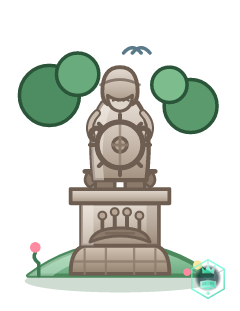 Spomenik stradalim pomorcimaA memorial by the shore to those who lost their lives at sea. Zadar has been a port since Roman Iader, and in Venetian times its harbour guarded the routes to the eastern Mediterranean.
 Športski centar VišnjikZadar's largest sports complex, with the Krešimir Ćosić hall for some 8,500 spectators, an indoor pool, a heating plant and four training pitches.
 Stadion StanoviZadar's main football stadium, holding some 5,860 spectators, completed for the 1979 Mediterranean Games, for which Zadar was one of the host cities.
 Studentski dom ZadarA student hall of residence with a canteen, opened in 2022 on Put Stanova; the Student Centre administration, which runs student housing and meals, is at another address.
 SupernovaA shopping centre on a city road which, unlike much of the eating and drinking in the old town, stays open all year rather than only from June to September.
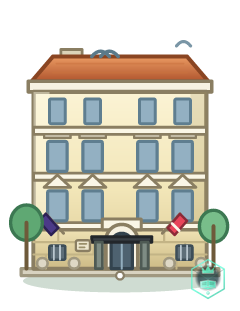 Sveučilište u ZadruCroatia's oldest university, founded in 1396 as a Dominican college. In the mid-16th century it won the right to award academic degrees; it worked until 1807 and was restored in 2002.
 Svjetionik Oštri RatA lighthouse raised in 1869 north of the entrance to Zadar's port, a tower 14 metres high. Its light carries up to fifteen nautical miles, and it now runs automatically, with no keeper.
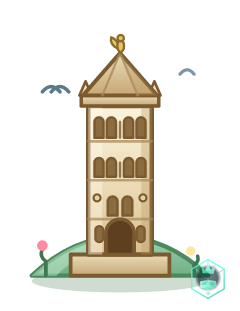 Toranj svete StošijeThe cathedral bell tower and the city's most recognisable vertical. Its first storey went up in the 15th century; the Englishman Thomas Graham Jackson added the upper ones in 1890-1894, modelled on Rab.
 Trg Damira Tomljanovića GavranaA square dedicated to a commander of the First Guards Brigade, killed in 1994 on the Zadar front below Velebit. His nickname Gavran came from the company he fought in.
 Trg kneza VišeslavaA square named after the duke of the early 9th century whose name is carved on the Višeslav font. The font was found in Venice, though most scholars hold that it came from Nin.
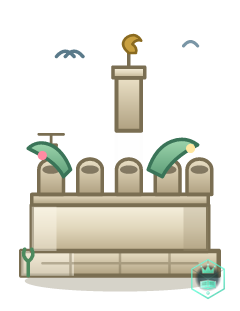 Trg pet bunaraA square created in 1574 by filling in the defensive ditch, when a great cistern for drinking water was built beneath it. Five ornate wellheads drew from it, and gave the square its name.
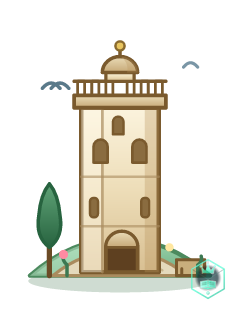 Trg Petra ZoranićaA square in the old town named after the Zadar writer born in 1508, author of Planine, the first Croatian novel. A memorial to him stands here, with Pavao Pavlović Square close by.
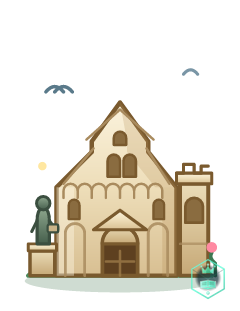 Trg sv. KrševanaThe square beside the church of the city's patron, a three-nave basilica of the 10th century consecrated in 1175. With the cathedral, it is the foremost Romanesque work in Dalmatian architecture.
 Tržnica ZadarA market in the old town by the city walls, with fruit, vegetables, oil, cheese and fish from the hinterland, the islands and the sea. The fish hall follows the catch, so the choice changes each morning.
 UskokA city beach by the Borik marina, also known as Vitrenjak and one of the busiest in town. What sets it apart is its access for people with disabilities: ramps into the sea and a fenced car park.
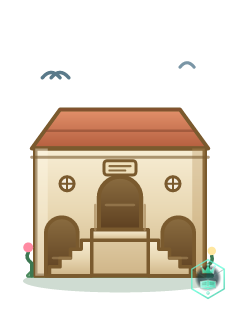 Veliki ArsenalOne of the largest Venetian port warehouses on the eastern Adriatic, enlarged in 1752 for the provveditore Balbi. After bombing burned off its roof, it was restored as a covered city square.
 Zeleni trgA green space in the dense city fabric, one of Zadar's smaller parks with benches, shade and a playground. The city's tradition of public parks began in 1829 on the Grimani bastion.
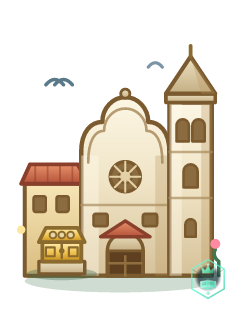 Zlato i srebro ZadraA permanent exhibition of church art in the convent of St Mary, prompted in 1951 by an essay of Miroslav Krleža. Its two hundred objects, from the 8th to the 18th century, were guarded by Benedictine nuns.
Nearby cities
Conquer Zadar with knowledge
The account is free. Take your phone for a walk and start with the nearest landmark.
Create a free account