
🇭🇷 Croatia
Split quiz
In Quizdom, Split is a map with 98 landmarks and 3,774 questions about the city’s history, culture and everyday life. Walk to a location, take the quiz and claim it.
- landmarks
- 98
- questions
- 3,774
- Map
- Illustrated city map
Questions about Split
The game has 3,774 questions about the city across 13 topics. Here is how they split by topic and difficulty.
By topic
- Nature679
- Local life610
- Culture496
- History443
- Architecture359
- Sea and seafaring224
- Sport191
- Archaeology178
+ 5 more topics
By difficulty
- Easy237
- Medium1,217
- Hard1,672
- Expert648
A quiz at a location picks five questions. Every answer comes with a short explanation.
Landmarks in Split
Every landmark is a location in the game. Open one for its description and its quiz.
 Ad basilicas pictasAn early Christian site with the remains of a basilica of the 5th or 6th century. Its name means 'at the painted basilicas' and points to painted churches that stood here before Salona's refugees came.
 Amfiteatar SalonaA 2nd-century amphitheatre for some fifteen thousand spectators, the largest on Croatian soil. The Venetians pulled much of it down in the 17th century so it could not become an Ottoman stronghold.
 Anđeo RafaelA shrine to the archangel Raphael, patron of travellers and of those seeking healing; his name means God heals, and he is shown as a youth with a staff or a fish.
 Arheološki muzejThe oldest museum in Croatia, founded in 1820 and in its present building since 1914. Its collection rests on finds from Salona: sarcophagi, inscriptions, mosaics, jewellery and coins.
 Bazilika na ManastirinamaAn early Christian cemetery basilica in Salona, raised over the grave of the bishop and martyr Domnius, around which a great cemetery of the faithful grew.
 Bedem CornaroPart of the Venetian bastion defence system raised around Split in the 16th century, adapted to artillery and grafted onto the walls of Diocletian's Palace.
 Benediktinski samostan sv. EufemijeThe remains of a Benedictine convent in the western part of the old town; in Dalmatian cities such convents were centres of literacy and handwork for centuries.
 City Center One SplitA large shopping centre at the eastern entrance to the city, on the main road and with a big car park, of the kind that changed shopping habits.
 Climbing center MarulianusA hall for sport climbing on artificial walls, a discipline that grew out of mountaineering and has been an Olympic sport since 2020.
 Crkva Gospe od Sedam žalostiThe church of Our Lady of Seven Sorrows in Split, at Meštrović Promenade 126, is protected cultural property.
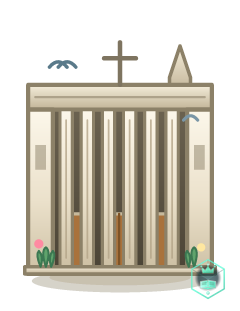 crkva Gospe od ZdravljaA church with a Marian title that spread across the Mediterranean after the great plague epidemics; such churches were raised as a vow. A Franciscan community serves it.
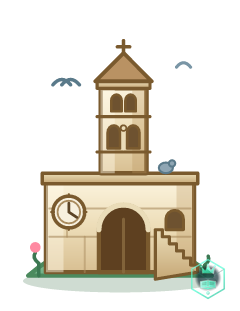 Crkva Gospe od Zvonika u SplituAn early medieval church fitted into the guardroom above the Iron Gate of Diocletian's Palace, tiny and odd in plan. Its bell tower is among the oldest early Romanesque ones in Croatia.
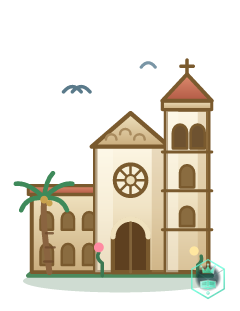 Crkva i samostan sv. Frane u SplituThe church and monastery of St Francis at the western end of the Riva, where the early Christian church of St Felix once stood; the Conventual Franciscans took it over in the 13th century and founded the monastery.
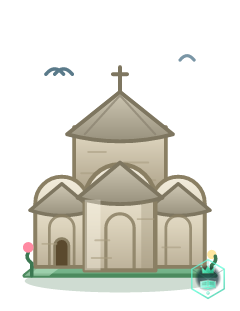 crkva Svete TrojiceA pre-Romanesque church of the 8th or 9th century in Poljud, unusual for its six-lobed plan with six apses around a central space. It speaks of building in the age of the Croatian dukes.
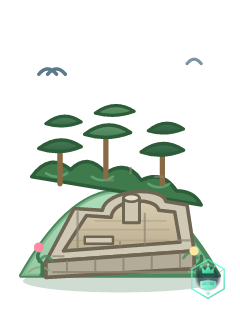 Crkva svetog BenediktaThe remains of a church beside a former Benedictine monastery in the western part of the old town; the Benedictines have been present in Dalmatia since the early Middle Ages.
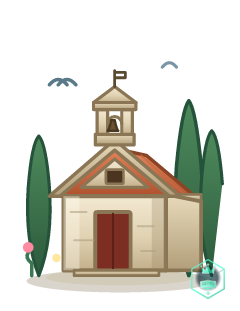 crkva svetog Lovre od PazdigradaA small church in the eastern part of the city dedicated to St Lawrence, the Roman deacon and 3rd-century martyr. His dedication is common in village and suburban churches across Dalmatia.
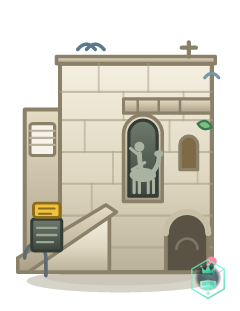 Crkva sv. Martina u SplituA tiny church fitted into the guard rooms above the Golden Gate of Diocletian's Palace as early as the 5th or 6th century; dedicated to St Martin, patron of soldiers and clothmakers, it is among the narrowest in Split.
 Crkva sv. Petra i MojsijaAn 11th-century church in Solin, known as the Hollow Church because its vault collapsed. The coronation of King Dmitar Zvonimir in 1076 is placed here, making it a key site of early Croatian statehood.
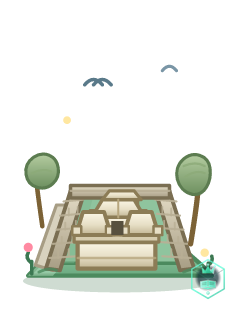 Crkva sv. Solinski mučeniciA basilica in Salona dedicated to the martyrs of Diocletian's persecutions, among them Bishop Domnius and the deacon Anastasius.
 Dioklecijanov akvaduktThe aqueduct that carried water from the Jadro spring near Solin to Diocletian's Palace over nine kilometres of gentle fall; it was restored in the 19th century.
 Dioklecijanova palačaAn imperial residence and military camp in one, raised around AD 300 over some 30,000 square metres. After Salona fell, refugees moved in and the palace became the core of Split.
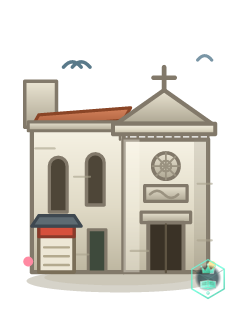 Dominikanska crkva sv. Katarine AleksandrijskeA church and monastery east of the palace by the Silver Gate; the Dominicans have been in Split since the 13th century. The church keeps valuable altarpieces, among them works by Venetian masters.
 FiruleA well-known sandy beach 240 metres long in the Firule cove and district, with a disused concrete pier; it hosts an annual glavomet championship and is the second home of Split's picigin players.
 FroggylandA museum of more than five hundred stuffed frogs arranged in scenes from human daily life, made over decades by the Hungarian teacher Ferenc Mere. It counts among Europe's odder collections.
 Galerija MeštrovićThe villa Ivan Meštrović raised on Meje in the 1930s as home and studio, and gave with its works to the Croatian people in 1952. House and garden show his sculpture in marble, bronze, wood and plaster.
 Galerija umjetnina, SplitA gallery founded in 1931 and now housed in the Old Hospital near the northern walls of Diocletian's Palace, within the Cornaro bastion; its permanent display runs from the 14th century to the present day.
 Gospe Od BetlemaA church with a Marian title tied to the birth of Christ. In Dalmatia the title appears on small churches by older settlements and roads, raised by local communities and confraternities.
 Gradska ribarnicaA fish market opened in 1890 by Marmontova street and working on the same spot for over a century. It is famous for having almost no flies, put down to sulphur fumes from a nearby spring.
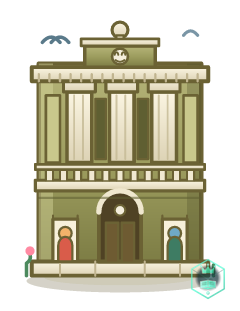 Gradsko kazalište lutakaA theatre staging puppet shows for children and young people; puppetry is one of the oldest theatrical forms, with glove, string and rod puppets.
 Grgur NinskiMeštrović's 1929 statue of the 10th-century bishop of Nin who argued for worship in the Slavic tongue. Passers-by rub his big toe, believing it grants wishes.
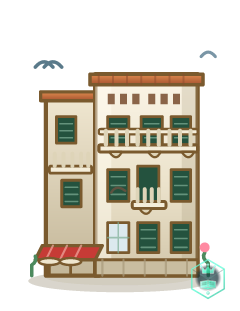 Hotel SlavijaOne of Split's oldest hotels, its business traceable to the early 20th century. It occupies old houses in the Get, the former Jewish quarter, right beside the synagogue.
 Hrvatski pomorski muzej u SplituThe Croatian Maritime Museum, founded in 1997 as heir to the maritime museum of 1925, occupies the 17th-century Gripe fortress and presents the maritime heritage of the Croatian Adriatic from prehistory on.
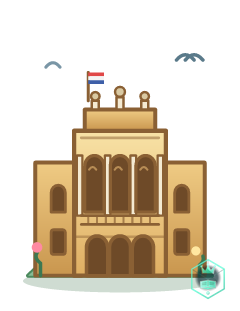 Hrvatsko narodno kazalište u SplituA theatre opened in 1893, then among the largest theatre buildings in this part of Europe. Badly damaged by fire in 1970, it was restored in 1979 and now houses drama, opera and ballet.
 Jupiterov hramThe temple of the supreme Roman god, raised around AD 300 and vaulted in coffered stone cut without timber centring. In the early Middle Ages it became the baptistery of St John the Baptist.
 KašjuniA pebble beach below the southern slope of Marjan, facing the open sea, with pine woods above and a steep drop into deeper water. Part of the surrounding forest park is protected, so no building is allowed.
 Kašjuni Beach ViewpointA lookout above a pebble beach on the southern side of Marjan, facing the open sea and the islands and reached by a road beneath the pine forest.
 Ljetno kino BačviceAn open-air cinema at Bačvice, part of the Dalmatian tradition of screenings under the sky that begin only after dark.
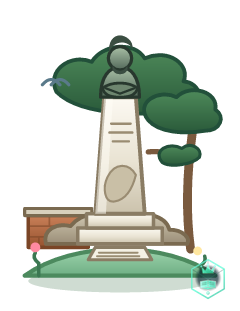 Luka BotićA monument to Luka Botić (1830-1863), the Split poet of the national revival and author of the tale Bijedna Mara, who died in his thirty-third year.
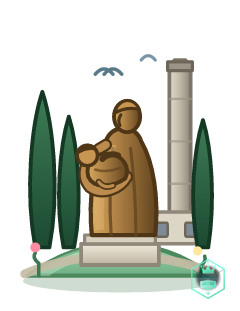 Majka i dijeteA sculpture on the mother and child motif, one of the oldest in the art, treated above all by Ivan Meštrović in 20th-century Croatian sculpture.
 Mala palača PapalićA 15th-century Gothic town house within Diocletian's Palace, attributed to the circle of Juraj Dalmatinac. It is known by its carved portal and windows with flamboyant Gothic tracery.
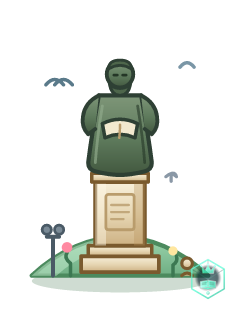 Marko MarulićMeštrović's statue of Marko Marulić, born in Split in 1450, author of Judita, the first work of art in the Croatian language, printed in 1521.
 MatejuškaThe old fishing harbour at the western end of the Riva, today a favourite seaside gathering place for young Split locals.
 Medicinski fakultet SplitA faculty founded in 1997 within the University of Split, teaching medicine in English as well as Croatian. It is known for its pain research and for championing evidence-based medicine.
 Mjedena vrataThe southern entrance to Diocletian's Palace, the only one opening straight onto the sea; while the water reached the wall, goods came through it into the cellars. Today it links the Riva with the Peristyle.
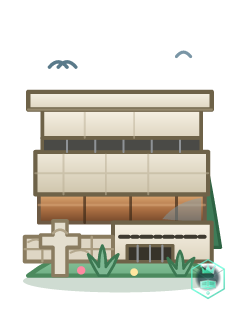 Muzej hrvatskih arheoloških spomenikaThe Museum of Croatian Archaeological Monuments (MHAS), a museum institution in the Meje district of Split.
 Muzej IluzijaA museum where visitors meet the tricks of sight through play: rooms with reversed perspective, mirror chambers and optical illusions, with notes on how the brain reads incomplete data from the eye.
 Muzej vode u SplituA museum within the city waterworks presenting Split's water supply, from Diocletian's aqueduct from the Jadro spring to today's systems. It explains how water is drawn, treated and distributed.
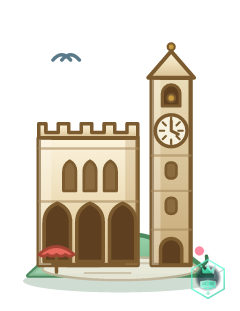 Narodni trgSplit's People's Square, known as the Pjaca, grew as the city spread west of the Iron Gate of Diocletian's Palace; with the main square moved west, the Peristyle was left as the cathedral square.
 Orson WellesA statue of Orson Welles, director of Citizen Kane, given to the city by the Croatian artist and Welles's collaborator Oja Kodar.
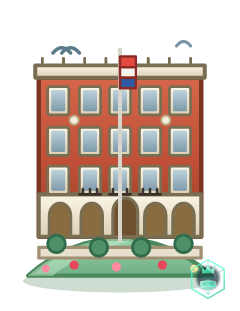 Palača Bajamonti-Dešković u SplituThe Bajamonti-Dešković palace in Split, Croatia, at Dr Franjo Tuđman Square 3 and Ban Mladenova 2, is protected cultural property.
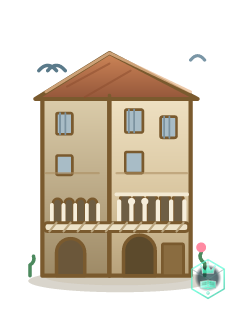 Palača Ciprianis-Benedetti u SplituAn outstanding example of late Romanesque architecture in Split, in the south-eastern corner of the Pjaca; the nobleman Ciprijan de Ciprianis built it in the late 14th century, and the Benedetti family held it from 1680.
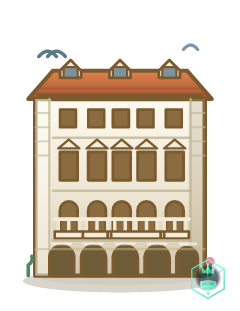 Palača MilesiOne of the finest Baroque palaces in Dalmatia, built in the 17th and 18th centuries for a wealthy merchant family. Meštrović's statue of Marko Marulić stands before it on Braće Radić Square.
 Park šuma MarjanMarjan is a hill, peninsula and forest park on the western part of the Split peninsula, forming a small peninsula of its own; the city lies to the east, below it.
 Plavo stabloA contemporary public artwork whose colour and shape break the everyday look of the street and leave its meaning open to the passer-by.
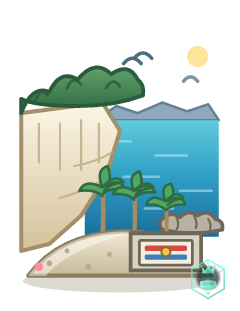 Plaža JežinacA smaller beach on the southern side of Marjan, between Zvončac and Kašjuni; its name points to the sea urchins on the rocky bottom, a sign of clean water.
 Prirodoslovni muzej i zoološki vrt grada SplitaThe natural history museum and zoo of Split, covering 0.65 hectares; the zoo sits on Marjan hill while the museum stands in the centre facing the market. The museum was founded in 1924, the zoo in March 1926.
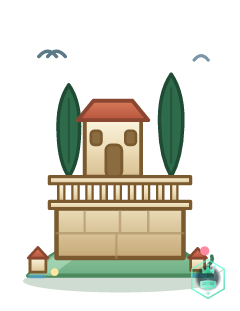 Prva vidilicaThe lowest and nearest of Marjan's lookouts, reached by steps from Varoš; it looks out over the old town, the harbour and the islands.
 Ruža vjetrovaA sculpture of the compass rose showing the directions the winds blow from. The basic rose has eight points, the elaborate one thirty-two; on the Adriatic each wind has a name - bura, jugo, maestral.
 SC Gripe, velika dvoranaA large hall raised for the 1979 Mediterranean Games and for decades one of the biggest in the country. It hosts basketball, handball and volleyball competitions as well as concerts.
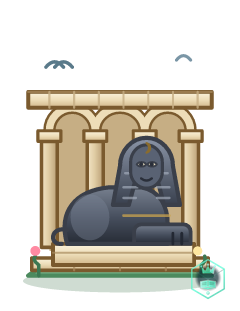 SfingaA black granite sphinx brought from Egypt while the palace was being built, though carved more than a thousand years earlier; it is the only one of the palace sphinxes left almost intact.
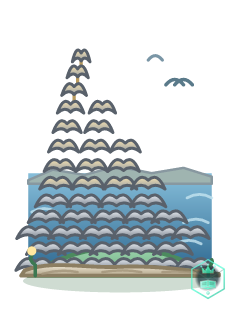 Skulptura galebova u borbiA sculpture of gulls fighting over food, a common motif in seaside sculpture; the yellow-legged gull is the most recognisable seabird of the Croatian coast.
 Spaladium ArenaThe largest indoor sports hall in Dalmatia, opened in 2009 for the World Handball Championship and seating around ten thousand. Besides sport it hosts concerts and trade fairs.
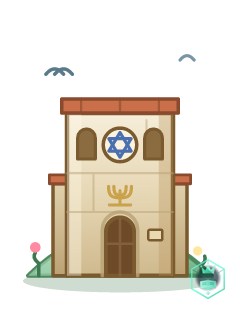 Splitska sinagogaA synagogue created in the 16th century from two houses leaning on the western wall of Diocletian's Palace, in the quarter known as the Get. It is among the oldest in Europe still in use.
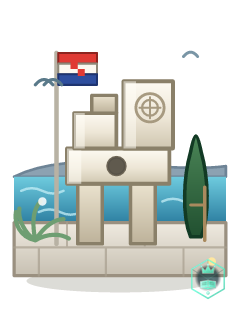 Spomenik žrtvama obrane SplitaA monument to those killed in the Homeland War; Split was an important logistics and hospital centre in the war, and its defenders fought on every front.
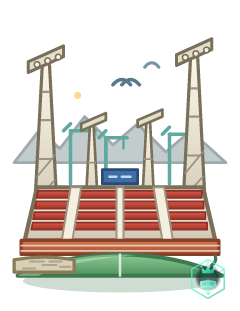 Stadion Park mladežiAn athletics stadium built for the 1990 European Athletics Championships, with an eight-lane track and sectors for jumps and throws. Training grounds stand alongside it.
 Stadion PoljudA stadium opened in 1979 for the Mediterranean Games, designed by Boris Magaš. Its shell-like roofs won it protection as cultural heritage; it is the home ground of Hajduk.
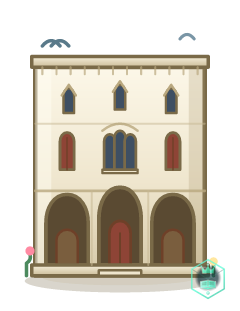 Stara gradska vijećnicaA 15th-century building raised as the seat of city government, known for its loggia with three pointed Gothic arches. The square before it, the Pjaca, has been the centre of rule and trade for centuries.
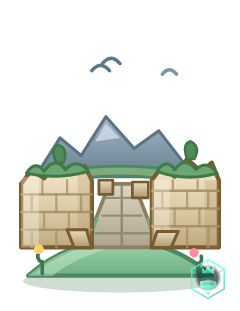 Starine - Salona - arheološko nalazište / parkThe site of Salona, capital of the Roman province of Dalmatia and the largest ancient city on Croatian soil, abandoned in the 7th century.
 Stari placThe popular name for Hajduk's former ground; before the club existed the plot was called Krajeva njiva and served the Austro-Hungarian army as a drill field. 3,149 matches were played here, and it is protected heritage.
 SustipanA peninsula west of the old town, named after the Benedictine monastery of St Stephen among the pines, recorded from the 10th century. A city cemetery stood here in the 19th century; today it is a park above the sea.
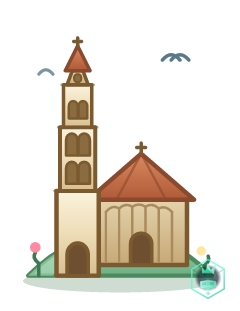 Sv. DujamA church dedicated to St Domnius, bishop of Salona and martyr of the early 4th century. He is the patron of Split, and his feast, Sudamja, is celebrated as the city's day on 7 May.
 Svjetionik PomoracA lighthouse on Split's breakwater showing sailors the safe approach to the port. Lighthouses are identified by the rhythm and colour of their flash, recorded on nautical charts.
 Svjetionik Split, lukobran, glavaThe lighthouse at the head of the breakwater marking the entrance to the city port. Lighthouses are told apart by the rhythm and colour of their flash, noted on charts; entering, starboard is green, port red.
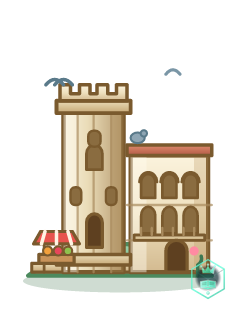 Trg braće RadićA square west of Diocletian's Palace, known locally as the Fruit Square and named after Stjepan and Antun Radić. A Venetian octagonal tower of the 15th century and the Baroque Milesi palace stand out.
 Tvrđava GripeA bastion fortress raised in 1657 during the Cretan War, with low sloping walls suited to artillery, to defend the city from the landward side. It now houses the Croatian Maritime Museum.
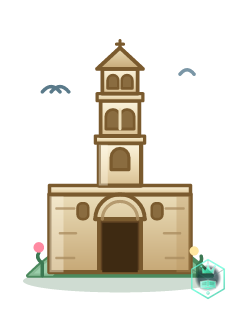 Željezna vrataThe western entrance to Diocletian's Palace, and the only one through which traffic never stopped. The church of Our Lady of the Belfry rises above it, and an ancient relief is still legible on the lintel.
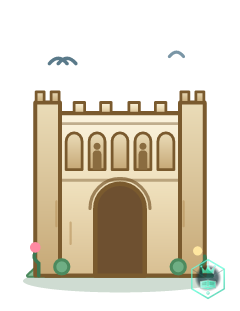 Zlatna vrataThe main, northern entrance to Diocletian's Palace, facing Salona and the most richly designed of its four gates. Meštrović's Gregory of Nin stands before it, his toe credited with granting wishes.
More locations in the game
crkva Gospe od Dobrića · Dioklecijanovi Podrumi · Dvorana Lora · Etnografski muzej Split · Kino Karaman · Konoba Fife · Lovrinac · Mall of Split · Marusinac · Muzej grada Splita · Palača Cindro · Palača Dragišić u Splitu · Park hrvatskih branitelja · Pazar · Plaža Obojena · Pusti me proć · Šperun · Spomenik Girometti · Spomenik palim lučkim i obalnim radnicima Splita · Spomenik političkim zatvorenicima, interniranima i deportiranima · Zastava - jedro
Nearby cities
Conquer Split with knowledge
The account is free. Take your phone for a walk and start with the nearest landmark.
Create a free account